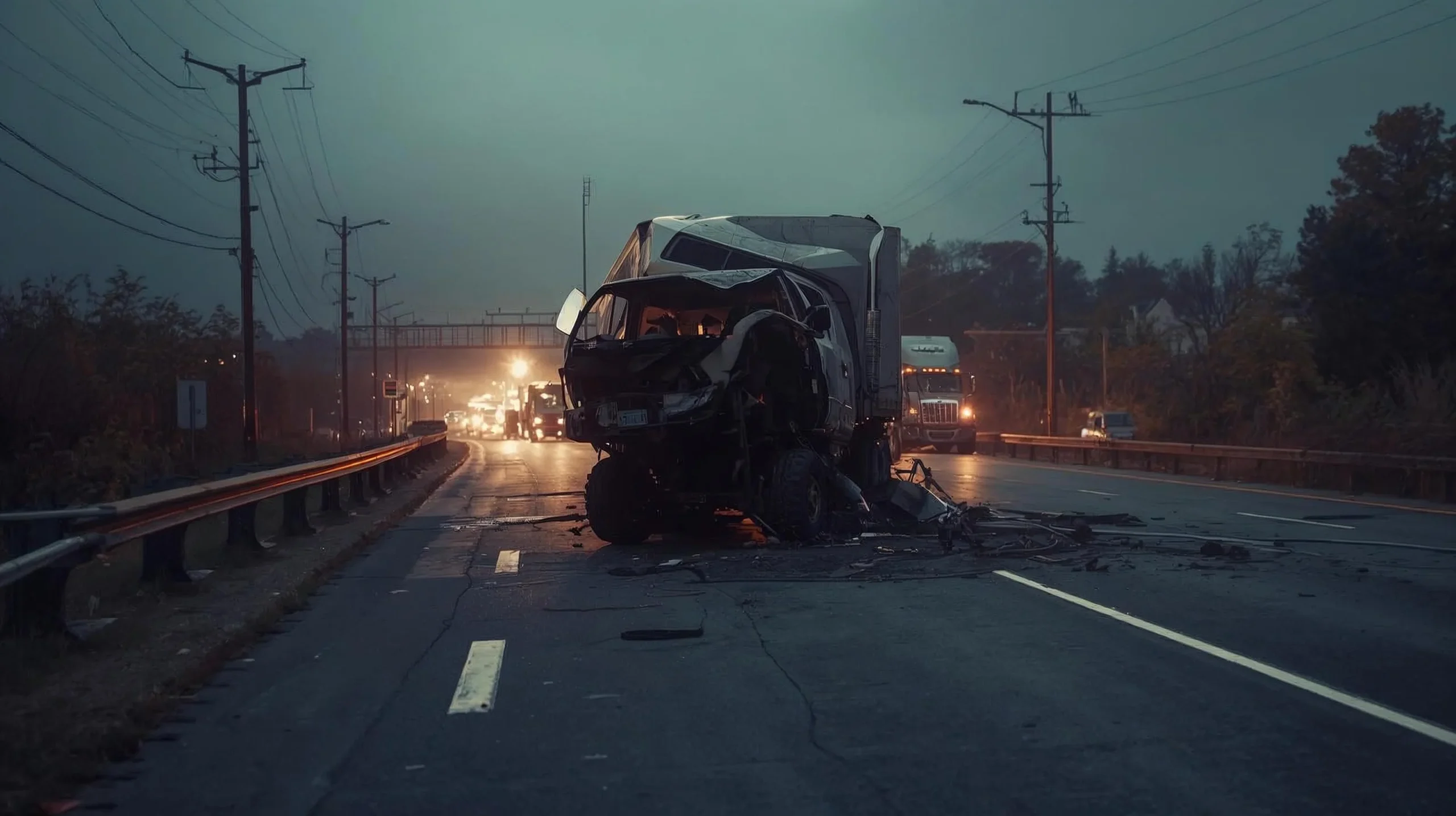
Truck accident laws include federal FMCSA regulations that govern driver hours, vehicle maintenance, and cargo loading, plus state liability laws that determine who pays for your injuries and how much you can recover. When trucking companies or drivers violate these laws, it creates evidence of negligence that strengthens your case and can significantly increase your compensation.
Understanding these laws matters because truck accidents are not like car accidents. Commercial trucks are regulated by an entirely separate system of federal and state rules. When a trucking company cuts corners on safety to save money or meet delivery deadlines, they are not just being careless. They are breaking the law. And that makes them liable for the harm they cause.
Federal Trucking Regulations That Protect You
The Federal Motor Carrier Safety Administration (FMCSA) sets the rules that govern commercial trucking across the United States. These regulations exist because an 80,000-pound truck driven by a fatigued, impaired, or undertrained driver is a deadly weapon. Every regulation represents lessons learned from crashes that killed or maimed innocent people.
Hours of Service Rules
Driver fatigue is one of the leading causes of truck accidents. To combat this, federal law strictly limits how long truck drivers can operate:
Federal Hours of Service Limits
- ⚠ Maximum 11 hours of driving after 10 consecutive hours off duty
- ⚠ Cannot drive beyond the 14th consecutive hour after coming on duty
- ⚠ Must take a 30-minute break after 8 cumulative hours of driving
- ⚠ Cannot exceed 60 hours in 7 days or 70 hours in 8 days
These are not suggestions. They are federal law. When a trucking company pressures a driver to exceed these limits, or when a driver falsifies logs to drive longer, they are breaking the law. If they cause an accident while in violation, that violation becomes powerful evidence of negligence.
Electronic Logging Device (ELD) Requirements
Since 2017, most commercial trucks must use electronic logging devices to automatically record driving time. ELDs connect to the truck’s engine and cannot be easily manipulated like the old paper logbooks.
However, some drivers and companies still try to cheat the system. They may use multiple driver identities, disconnect the ELD, or claim personal conveyance time for what is actually work driving. A truck accident lawyer knows how to detect these violations.
Drug and Alcohol Testing Requirements
Commercial truck drivers must submit to drug and alcohol testing before employment, after accidents, upon reasonable suspicion, randomly, and when returning to duty after a violation.
The blood alcohol limit for commercial drivers is 0.04%, half the limit for regular drivers. Drivers are prohibited from using Schedule I controlled substances, including marijuana, even in states where it is legal for recreational use.
A trucking company that fails to properly test drivers, or that ignores positive test results, can be held liable when an impaired driver causes a crash.
Driver Qualification Standards
Not just anyone can drive a commercial truck. Federal law requires:
- A valid Commercial Driver’s License (CDL) with appropriate endorsements for the type of vehicle and cargo.
- A current medical certificate proving the driver is physically qualified to operate a commercial vehicle.
- A clean driving record meeting federal standards.
- Proof of adequate training for the specific vehicle type.
Trucking companies must maintain driver qualification files documenting compliance with all these requirements. When they hire unqualified drivers or fail to verify credentials, they are liable for the consequences.
Vehicle Maintenance and Inspection Requirements
Federal regulations require trucking companies to systematically inspect, repair, and maintain all commercial vehicles. Specific requirements include:
- Pre-trip and post-trip inspections by drivers before and after each trip.
- Annual inspections by qualified inspectors.
- Documentation of all maintenance and repairs.
- Immediate removal from service of vehicles with critical safety defects.
Brake systems, tires, lights, steering, suspension, and coupling devices must all meet federal safety standards. When a truck causes an accident because of a maintenance failure, the company’s inspection and repair records become critical evidence.
Cargo Securement Rules
Improperly loaded or secured cargo can shift during transit, causing the truck to roll over or jackknife. Unsecured cargo can fall onto the roadway, creating hazards for other drivers.
Federal regulations specify how different types of cargo must be secured, including the number and strength of tie-downs required. The shipper, carrier, and driver may all share liability when cargo-related violations cause accidents.
Florida Truck Accident Laws
In addition to federal regulations, Florida state law governs how truck accident claims work and what compensation victims can recover.
No-Fault Insurance and the Serious Injury Threshold
Florida operates under a no-fault auto insurance system. After any accident, your own Personal Injury Protection (PIP) insurance covers your initial medical expenses and lost wages, regardless of who caused the crash.
However, Florida law allows victims with serious injuries to step outside the no-fault system and pursue a claim directly against the at-fault party. Given the severity of most truck accident injuries, victims typically qualify to file a liability claim against the trucking company and driver.
A “serious injury” under Florida law includes:
- Significant and permanent loss of an important bodily function
- Permanent injury within a reasonable degree of medical probability
- Significant and permanent scarring or disfigurement
- Death
Truck accidents frequently cause injuries meeting these thresholds, including traumatic brain injuries, spinal cord damage, amputations, and multiple fractures.
Modified Comparative Fault
Florida follows a modified comparative fault rule. If you share some responsibility for the accident, your compensation is reduced by your percentage of fault.
For example, if your total damages are $500,000 but you are found 10% at fault, your recovery is reduced to $450,000.
Importantly, if you are more than 50% at fault for the accident, you cannot recover any compensation under Florida law. Trucking companies and their insurers will aggressively try to shift blame onto victims. A skilled truck accident attorney protects you from these tactics.
Two-Year Statute of Limitations
In Florida, you have two years from the date of the accident to file a personal injury lawsuit. Miss this deadline, and you lose your right to sue entirely.
However, the real deadline is much sooner. Critical evidence, including black box data, driver logs, and dashcam footage, can disappear within days or weeks. Contacting an attorney immediately after your accident is essential to preserve this evidence.
Truck Accident Laws in New York, New Jersey, and Pennsylvania
Vladimir Tsirkin is licensed in Florida, New York, New Jersey, and Pennsylvania, allowing him to represent clients injured while traveling between states or those who regularly move between the Northeast and Florida.
| State | Statute of Limitations | Fault Rule | Fault Bar |
|---|---|---|---|
| Florida | 2 years | Modified comparative | 50% bar |
| New York | 3 years | Pure comparative | No bar |
| New Jersey | 2 years | Modified comparative | 50% bar |
| Pennsylvania | 2 years | Modified comparative | 51% bar |
All four states are subject to the same federal FMCSA regulations governing truck driver hours, maintenance, and qualifications. When a trucking company violates federal law, that violation strengthens your case regardless of which state you file in.
How Violations of Trucking Laws Strengthen Your Case
When trucking companies and drivers violate safety regulations, those violations become powerful evidence of negligence. Instead of having to prove that the defendant failed to act reasonably, you can show they broke specific laws designed to prevent exactly the type of accident that injured you.
Hours of Service Violations Prove Fatigue. If the truck driver exceeded legal driving limits and then crashed, you do not need to prove they were tired. The violation itself establishes that they were operating illegally and unsafely.
Maintenance Failures Prove Negligence. If brake failure caused the accident and records show the trucking company skipped required inspections, the company cannot claim the failure was unforeseeable. Their own records prove they neglected their legal duty.
Drug Test Failures Prove Impairment. If the driver tested positive for prohibited substances, or if the company failed to conduct required testing, that evidence can establish liability and may support punitive damages.
Qualification Violations Prove Negligent Hiring. If the driver lacked proper licensing or medical certification, the trucking company is liable for putting an unqualified driver on the road.
“General practitioners often miss federal trucking law nuances, underestimate the need for expert reconstructionists, or fail to subpoena telematics and GPS data promptly. Without specialized knowledge, crucial liability evidence can vanish within weeks.”
Who Can Be Held Liable Under Truck Accident Laws
Truck accident laws create potential liability for multiple parties, not just the driver who hit you.
The Truck Driver is liable for their own negligence, including speeding, distracted driving, fatigue, impairment, or traffic violations.
The Trucking Company can be held liable for:
- Vicarious liability for the driver’s actions while on the job
- Negligent hiring of unqualified or dangerous drivers
- Negligent supervision and training
- Pressuring drivers to violate hours of service rules
- Failing to maintain vehicles
- Failing to comply with drug testing requirements
Cargo Shippers and Loaders may be liable if improperly loaded or secured cargo caused the accident.
Truck and Parts Manufacturers may be liable if defective equipment, such as faulty brakes or tires, caused the crash.
Maintenance Contractors may be liable if negligent repairs contributed to a mechanical failure.
Identifying all liable parties matters because it expands the available insurance coverage and assets to pay your claim.
What Compensation Can You Recover Under Truck Accident Laws
Truck accident victims in Florida can recover compensation for all damages caused by the crash:
Recoverable Damages
- ✓ Medical expenses, emergency care, surgeries, rehabilitation, future treatment
- ✓ Lost wages, income missed during recovery
- ✓ Lost earning capacity, if injuries prevent returning to work
- ✓ Pain and suffering, physical pain and emotional distress
- ✓ Loss of enjoyment of life, inability to do activities you once enjoyed
- ✓ Property damage, vehicle repair or replacement
- ✓ Wrongful death damages, funeral costs, loss of support, loss of companionship
- ✓ Punitive damages, in cases of egregious violations
Vladimir Tsirkin Knows Trucking Laws Inside and Out
Vladimir Tsirkin’s philosophy is about restoring balance by leveraging evidence, regulation, and aggressive litigation to secure justice, not just settlement.
When you hire Vladimir Tsirkin and Associates, the firm immediately sends evidence preservation letters to secure black box data, dashcam footage, driver logs, and qualification files. A forensic specialist may be retained within 24 hours to document the crash scene before evidence fades.
The firm works with accident reconstructionists, medical specialists, DOT compliance experts, and financial analysts to build comprehensive cases. These long-term relationships allow aggressive litigation without forcing early settlement.
Vladimir Tsirkin is licensed in Florida, New York, New Jersey, and Pennsylvania. Whether you were injured in Hallandale Beach, visiting family in the Northeast, or traveling for work, he can handle your case across state lines. Learn more about accident lawyer costs and the settlement timeline.
“We prepare every case as if it will go to trial. If the client prefers a settlement, our case preparation drives higher settlements. Insurance companies know which lawyers are willing to fight.”
Free Truck Accident Consultation
No fee unless we win your case
Frequently Asked Questions About Truck Accident Laws
What is the FMCSA?
The Federal Motor Carrier Safety Administration is the federal agency that regulates commercial trucking in the United States. FMCSA sets and enforces rules on driver hours, drug testing, vehicle maintenance, driver qualifications, and cargo securement. Violations of FMCSA regulations can establish liability in truck accident cases.
How many hours can a truck driver legally drive?
Under federal hours of service rules, a truck driver may drive a maximum of 11 hours after 10 consecutive hours off duty. They cannot drive beyond the 14th hour after coming on duty. They must take a 30-minute break after 8 hours of driving. And they cannot exceed 60 hours of driving in 7 days or 70 hours in 8 days.
What is the statute of limitations for truck accidents in Florida?
In Florida, you have two years from the date of the accident to file a personal injury lawsuit. However, you should contact an attorney immediately because critical evidence can disappear within days. In New York, the statute of limitations is three years. In New Jersey and Pennsylvania, it is two years. See our full truck accident FAQ for more details.
Can I still recover compensation if I was partially at fault?
In Florida, you can recover compensation if you were 50% or less at fault for the accident. Your recovery is reduced by your percentage of fault. If you were more than 50% at fault, you cannot recover any compensation. Trucking companies will try to blame victims to reduce their liability, which is why you need an attorney to protect your interests.
What evidence do I need to prove a trucking company violated the law?
Evidence of trucking law violations includes the truck’s electronic data recorder (black box), electronic logging device records, driver qualification files, drug and alcohol test results, vehicle maintenance records, dispatch communications, and GPS data. This evidence must be preserved quickly before it is overwritten or destroyed. Contact us immediately to ensure evidence is preserved.
Legal Disclaimer: This blog post is for informational purposes only and does not constitute legal advice. Every case is different, and outcomes depend on the specific facts and circumstances involved. For legal advice specific to your situation, contact Vladimir Tsirkin and Associates for a free consultation.