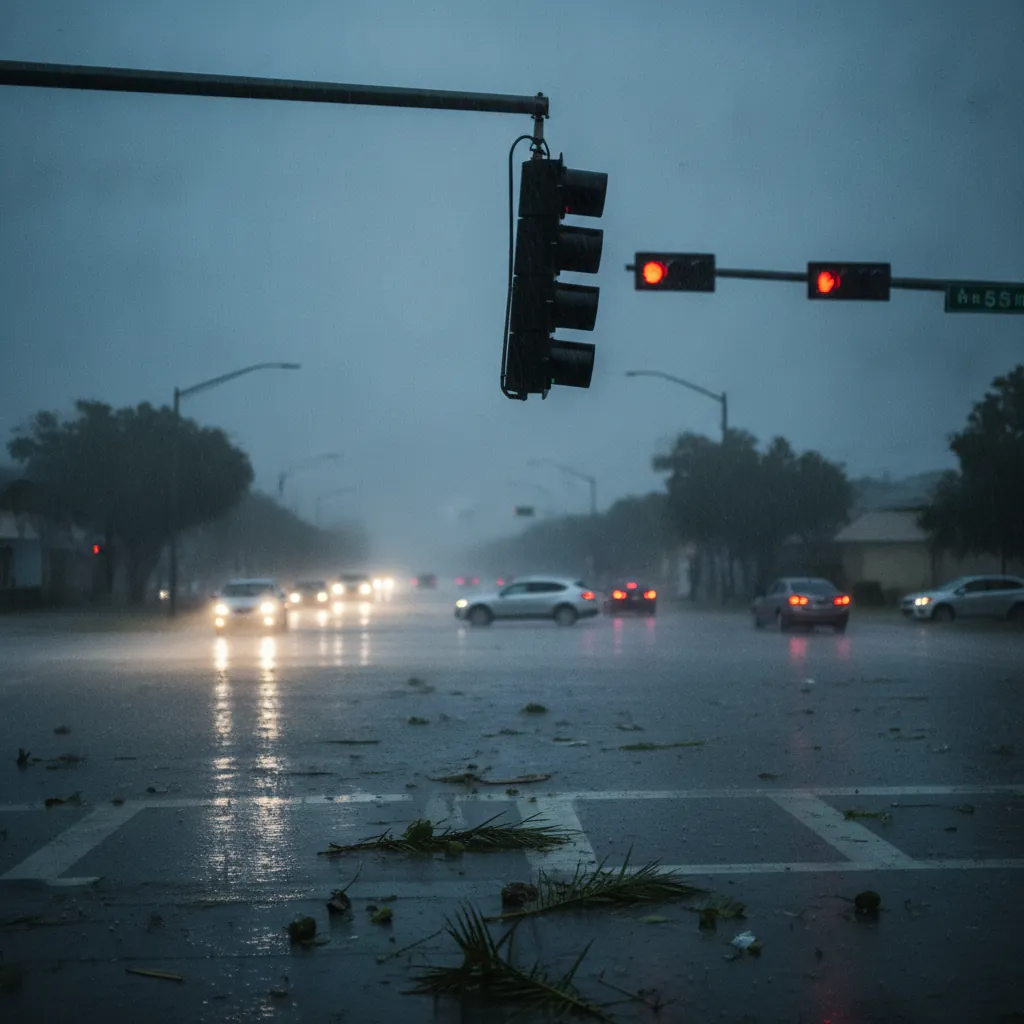
Fault turns on who acted unreasonably, not on the weather. At an intersection with a dead traffic signal, Florida treats the crossing like a four-way stop, so a driver who fails to stop and yield can be liable. Storm conditions do not erase fault, they raise the care each driver owes. And under Florida's modified comparative negligence law, a driver found more than 50 percent at fault generally recovers nothing.
South Florida crashes rarely have a single villain when a storm is involved. Here is how the fault actually gets sorted, scenario by scenario.
A dead traffic signal is treated like a four-way stop
When a signal is dark or flashing red, the intersection does not become a free-for-all, and it does not belong to whoever gets there fastest. Florida rules of the road treat it as a stop-controlled intersection. Attorney Vladimir Tsirkin puts the driver's duty plainly:
"Treat an intersection with a malfunctioning signal like a stop-sign intersection. Come to a complete stop, watch for vehicles, pedestrians, and cyclists, and proceed only when it is safe and you have the right of way."
That standard is what liability is measured against afterward. A driver who rolls through a dead signal without stopping, or who takes a turn that was not theirs to take, is the one who drove unreasonably. The fact that the light was out does not shift the blame onto the power company or the county in most crashes. It puts the focus on which driver ignored the duty to stop and yield.
Crashes caused by flooding and standing water
Standing water is where a lot of South Florida drivers assume the storm is at fault and stop there. Fault still lands on choices. Driving too fast for standing water, following too closely to stop on a slick road, or pushing into a flooded stretch where the depth is unknown are all decisions a driver made. Hydroplaning into the car ahead is usually treated as the trailing driver's failure to keep a safe distance and a safe speed for the conditions.
There can be more than one responsible party. If a stretch of road floods because of a drainage failure that a government entity knew about and did not address, that entity may share fault, though claims against a government body carry their own notice requirements and limits discussed below. The point is that "it was flooding" is the start of the fault question, not the answer to it.
Debris in the road: the driver, a third party, or something else
Debris crashes split into a few patterns, and the liable party depends on where the debris came from.
- An unsecured load. If cargo, a mattress, a ladder, or building material falls off a vehicle and causes a crash, the driver or company that failed to secure the load can be liable.
- Storm debris already in the lane. A driver who had a fair chance to see and avoid it, and did not, may carry fault for how they reacted. A driver with no reasonable chance to avoid suddenly revealed debris is in a different position.
- Debris tied to a work site or a property. Material that entered the roadway from a construction zone or an adjacent property can point to a third party who created the hazard.
Sorting this out is an evidence question. Dashcam footage, the position of the vehicles, witness accounts, and where the debris originated all matter, and that record is easiest to preserve early.
How Florida decides what you can recover: the 50 percent line
Even when the other driver is mostly at fault, your own share of the blame changes the outcome, and in storm crashes both drivers are often assigned some. Florida uses modified comparative negligence. As Vladimir Tsirkin describes the rule, a person found more than 50 percent responsible for the accident generally cannot recover damages in a negligence action.
Below that line, you can still recover, reduced by your percentage of fault. If your damages are 100,000 dollars and you are found 20 percent at fault, recovery is reduced to 80,000 dollars. Cross the line to 51 percent, and recovery generally drops to nothing. That is why insurers work hard to pin extra fault on you after a weather crash, and why how the fault gets apportioned is worth taking seriously rather than conceding.
Extra caution is both the safe driving move and the legal one. Reduce speed, leave extra stopping distance, and never assume another driver sees you or will yield when flooding, darkness, storm damage, or debris makes the road more dangerous. The driver who can show they did that is the driver who keeps their share of fault low.
When a government entity may share the blame
Sometimes the hazard traces to a public agency, a signal that stayed dead for days after the utility was on notice, a known drainage failure, or debris a maintenance crew left in a travel lane. A government entity can be liable in those situations, but Florida law treats those claims differently. There are formal notice requirements you generally have to meet before you can sue, sovereign immunity limits the dollar amount recoverable in many cases, and the deadlines are strict. These claims are harder and more procedural than a claim against another driver, which is a strong reason to have the facts reviewed early rather than assuming the door is closed.
Talk to Vladimir Tsirkin & Associates, P.A. in Hallandale Beach
Vladimir Tsirkin & Associates, P.A. is an injury firm at 800 SE 4th Ave in Hallandale Beach, rated 4.9 out of 5 across 188 Google reviews. Attorney Vladimir Tsirkin is licensed in Florida, New York, New Jersey, and Pennsylvania, and works alongside attorney Daniel Karmansky. The firm works in English, Russian, and Spanish.
"Best personal injury law firm in South Florida! Attorney Tsirkin and his highly professional team are on top of things when it's needed most!"
Irakli Goginava
When a storm crash involves shared fault, a malfunctioning signal, or a possible government entity, locking down the evidence early is what keeps the fault question honest. A Hallandale Beach car accident lawyer can investigate how the crash happened, push back on an unfair fault percentage, and tell you where you stand. If your injury started with a fall on storm-flooded property rather than in a vehicle, the firm also handles a slip and fall on storm-flooded property. There is no fee unless the firm wins your case. Call 800-99-CRASH, text 305-831-4333, or request a free consultation.
Frequently Asked Questions
The light was out, so isn't the city at fault?
Usually not by itself. Florida treats a dead signal like a four-way stop, so the crash generally turns on which driver failed to stop and yield. A government entity shares fault only in narrower situations, such as a known hazard left unaddressed, and those claims carry special notice rules.
Can I recover if I was partly at fault in the storm?
Yes, as long as you are found 50 percent at fault or less. Your recovery is reduced by your share. Above 50 percent, Florida generally bars recovery in a negligence claim, which is why fighting an inflated fault percentage matters.
Who pays if debris fell off another vehicle?
The driver or company that failed to secure the load can be liable. Identifying that vehicle quickly is the challenge, which is where dashcam footage, witnesses, and an early investigation help.
What should I do at the scene of a storm crash?
If it is safe, document everything: the standing water or debris, the dark signal, the vehicle positions, and the conditions. Get medical attention, and get the facts reviewed before the scene and the evidence are gone.
Disclaimer: This information is provided for educational purposes and does not constitute legal advice. Every case is unique. Contact our office to discuss your specific situation.
Attorney Advertising.